


🥶Essential Tips for Staying Cozy in Your Campervan During Winter


Winter Vanlife Essentials – Put Simply ❄️
When the temperature drops and frost starts forming on your windscreen, many vanlifers pack up for the season — but if you prepare properly, winter vanlife can be magical.
Snowy mornings, quiet campsites, crisp walks, and that cosy feeling when you’re tucked up inside your van with a hot drink a film on Netflix! ☕
Enjoying your campervan, whatever the weather, just takes a little prior planning. In this article, I’ll go through, as simply as possible, the winter essentials that will keep you warm, safe, and comfortable when living or travelling in your campervan.
1. Diesel Heaters 🔥
Cost: mid to high depending on brand and installation (£200–£1k)
Ideal for: long-term travellers, cold climates, wild camping
Diesel heaters are one of the best ways to heat your van. They run off your vehicle’s diesel supply (or a separate tank) and use a small amount of electricity to power a fan and glow plug.
They’re efficient, reliable, and provide instant dry heat — meaning less condensation.
You can set the thermostat, and it will kick in when the temperature drops too low. Some even have timers to set for that early morning wake-up.
Once fitted, they’re almost hassle-free.
✅Pros:
Great heat output for the size
No moisture created (unlike gas heaters)
Fuel is easy to find anywhere – most run on the diesel in your van’s tank
❌Cons:
Initial setup cost and installation can be tricky — many videos online show how to DIY, but for a novice, it may be better to get a pro
Needs regular servicing and a clean fuel line
You’ll need:
Cheaper heaters with separate tank (Chinese diesel heater)
Stand-alone all-in-one heater
The creme de la crème — Eberspächer Diesel heater – these can supply or try Eberspächer to find a fitter near you

2. LPG / Propane Heaters 🔥
Cost: varies by model (£100–£500)
Ideal for: campsite users and off-grid
LPG heaters (or propane heaters) are brilliant if you’re on a site with good ventilation or using your van’s built-in gas system.
They produce instant heat, but because they release moisture as they burn, ventilation is essential.
It is also VITAL to never forget your carbon monoxide detector and test it regularly! Sadly, there are many deaths from CO poisoning every year in the camping community, and a detector is so cheap and easy to install.
✅Pros:
Quick heat
Portable options available
Uses the same gas as your stove and perhaps water heater, depending on your camper setup
❌Cons:
Adds moisture to the air, which can become a problem
Requires good airflow and safety awareness
You’ll need:
You can buy LPG heaters from here

3. Portable Mini Gas Camping Heaters 🔥
Cost: low (£15–£50)
Ideal for: occasional use, emergency heat
These little heaters can save the day when you just need a quick blast of warmth. But use them with a window cracked open and never while you sleep.

Again, it’s essential to have a CO detector.
✅Pros:
Cheap and portable
Great for short-term use
Some can be used as a stove as well
❌Cons:
Burn through gas quickly — expensive for long-term use but a great emergency backup
Not for overnight heating for safety reasons
You'll need :
Gas heater - This is the one we have and it can be used to cook on too
4. Solid Fuel Stoves (Wood Burners) 🔥
Cost: medium to high (including installation)
Ideal for: long-term vanlifers, off-grid living,traveling too very cold climates and those who love the cosy factor
There’s something magical about a small wood-burning stove in a campervan — that soft crackle, real flame, and gentle warmth.
Solid fuel stoves run on small logs, kindling, or eco-briquettes and can heat even a large van beautifully.
However, they need careful installation — including a chimney flue, fireproof hearth, and heat protection panels on surrounding walls.
Proper ventilation and a working carbon monoxide detector are non-negotiable.
✅Pros:
Gorgeous ambience and dry heat
Works completely off-grid (no gas or electric)
Can be used to boil a kettle or cook simple meals
Great for drying clothes nearby (carefully)
❌Cons:
Requires safe installation and regular cleaning
Space-consuming in smaller vans
You’ll need to store dry fuel and kindling
Hard to find an ambient temperature — you’re either freezing or roasting hot !
Not instant heat like a diesel heater
Items needed:
Mini wood stove (many van-friendly models available) Cheaper option on amazon here or try here UK made mini wood burner made Especially with camper vans in mind.
Heatproof hearth and wall shields
Chimney flue and roof flashing kit
Fire extinguisher (always wise to have one onboard)
5. Insulating Your Campervan 🧤
If you’re still building or planning your conversion, insulation is everything.
It keeps the heat inside in the winter and the heat outside in the summer.
Invest time here and you’ll thank yourself later.
Use proper van insulation boards or sheep wool, cover metal ribs of the van, and don’t forget the doors and floor.
If you’re buying a ready-built van, ask for photos of the build in progress — most people document their build.
6. Ventilation 💨
It might sound counterintuitive, but even in winter, you need ventilation. Breathing, cooking, and heating all release moisture, which can quickly lead to damp bedding and mould.
Crack a roof vent or window slightly and use a small 12v fan if you can.
Our build has a MaxxAir fan that can blow air in or suck air out. When not on a campsite, the MaxxAir fan allows us to keep ventilation without an open window.
Items mentioned :
7. Sleeping Bags & Bed Toppers 💤
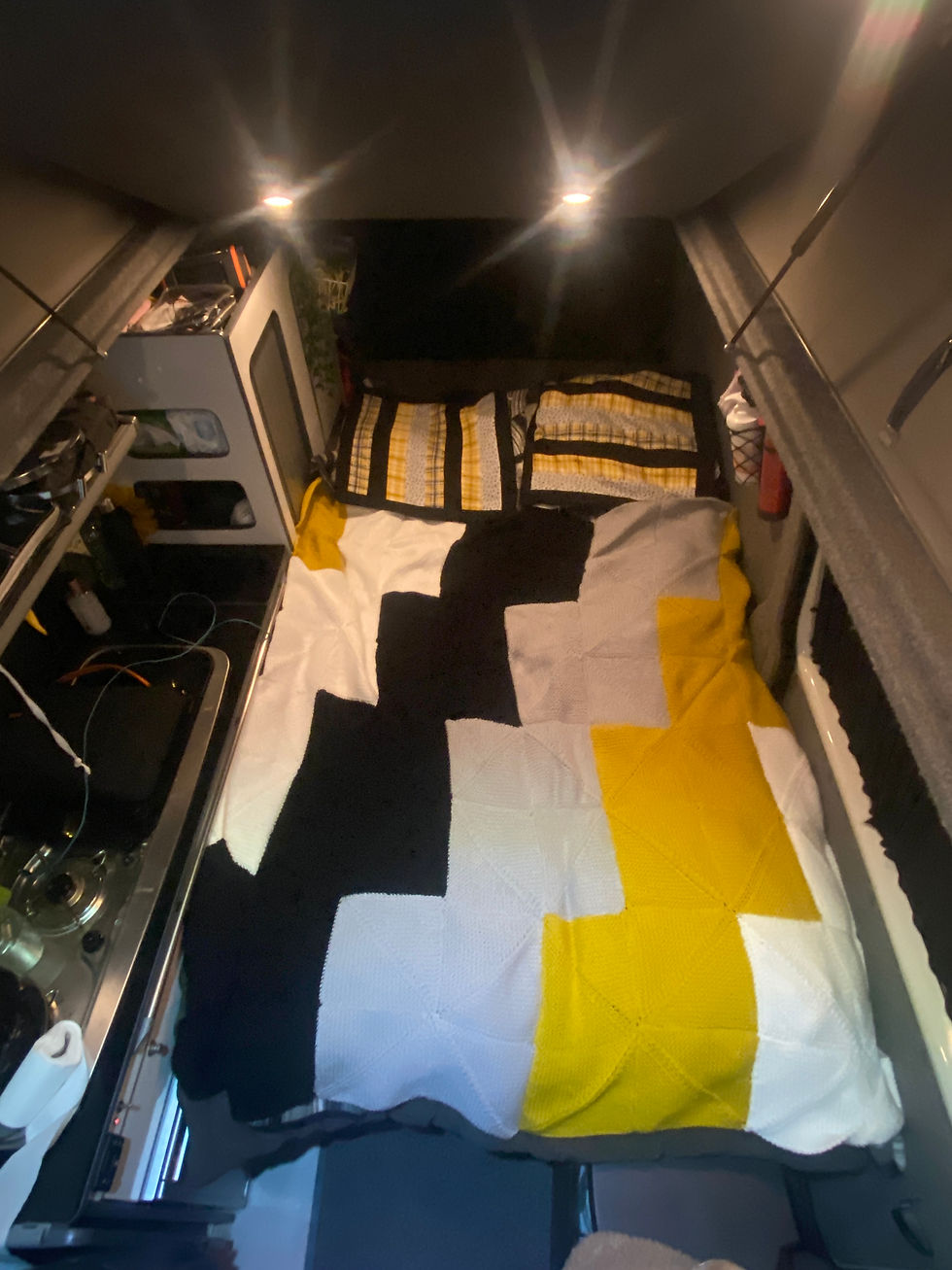
A four-season sleeping bag rated to at least -5°C is ideal for winter vanlife. Add a memory foam topper or sheepskin underlay for extra insulation underneath — most heat is lost through your mattress!
A simple piece of carpet or rug is a cheap and cosy idea if your budget is tight.
Dave swears by his army sleeping bag for freezing conditions, but I prefer a duvet for that homely feel.
If you have a power bank or USB socket, try this USB heated blanket but cuddle it inside the bed rather than on top.
Items mentioned :
8. Hot Drinks & Meals 🍵
Soups, stews, tea, coffee, and even a mug of hot chocolate do wonders for your core temperature (and mood). Keep a flask handy for days out.
We swear by the Stanley flask — not only does it offer a lifetime guarantee, but a hot cup of tea will stay roasting hot until morning!

Items needed:
Stanley flask with lifetime guarantee
The Stanley food flask is also great for keeping food hot
Note - we have actually used the lifetime guarentee for a broken seal and it has always been honoured
9. Exercise & Movement 🏃♂️
When parked up in the cold, it’s easy to stay still — but a quick walk, jog, or some stretches in your van will warm you up faster than any heater.
Some communities, especially in the UK, have warm spaces where people can go to get warm, often with free food and hot drinks.
Libraries, museums, gyms, and leisure centres are all great for a change of scenery and a warm-up. Gyms offering shower facilities are an added bonus!
10. Electric Hook-Up & Small Electric Heaters 🔌
If you’re on a campsite and paying a fee, plug into electric hook-up and use a small low-wattage electric heater or oil-filled radiator. Safe, silent, and no fumes — perfect for long, cold nights.
Most campsites do shut for the winter, so check before you go.
Items needed:
This Small low-wattage heater ( 500 w )
Mini oil-filled radiator (450w)
11. When It’s Just Too Cold… 🏨
Let’s be honest — sometimes, it’s simply freezing. There’s no shame in booking into a cheap hotel or B&B for a night to defrost. A few nights can help lift your spirits and help you get reorganised.
Check out Trivago for last minute cheaper deals
12. Other Handy Tips 🧣
Keep spare socks and gloves within reach — lots of heat is lost through your feet and head
Store drinking water bottles inside to stop them freezing
A small usb 12v fan helps circulate warm air evenly
Dehumidifier crystals help reduce condensation, and a Karcher window hoover comes highly recommended by many vanlifers
Our Thoughts 💭
We travel all year round, and winter has never stopped us — in fact, we love that winter means fewer crowds in tourist spots. There’s nothing better than cosying up in the van on a wet, cold day.
Our T5 had an Eberspächer diesel heater, and with the pop-top down, we actually got too hot!

If the pop-top was up, we used a homemade insulation wrap which helped a lot. You can watch the video here or buy a ready-made thermal wrap here
In our new VW Crafter, we now have a Chinese diesel heater and have yet to try it out in winter.
We also have a mini gas heater for emergencies — instant warmth, but don’t forget a working carbon monoxide detector!
To conclude:
Don’t let the weather put you off travelling, but do prepare a little so you’re comfortable. You can spend a lot on integrated heaters or simply grab a portable gas heater — either way, you’ll be super snug in your little home on wheels.

Whatever you decide we hope you’ve found this article useful.
Some links given are affiliate links meaning if you take a look and choose to buy, I get a small amount of commission, so thank you.
But most of all we want to help others to enjoy the freedom that comes with campervanning.
🚐 Happy “winter” travels! ❄️
For more ideas , tip and tricks of 'Vanlife' check out our YouTube channel or our website.
🚐 VANLIFE GOODIES - Escape While You Can !☀️


Comments